



What Is Psyllium Husk and Why Is It in Your Food?
You've probably seen it listed on the back of health products — psyllium husk. But what actually is it, and why does it keep showing up in fiber supplements, gut health foods, and products like Fibes?
Here's a straightforward explanation.
Where Does Psyllium Husk Come From?
Psyllium husk comes from the seeds of Plantago ovata, a plant native to India and parts of the Mediterranean. The outer coating of the seed — the husk — is where almost all the fiber is found. It's been used in traditional medicine for centuries, and today it's one of the most well-researched dietary fibers in the world.
What Makes It Special?
Psyllium is what's called a soluble fiber — meaning it dissolves in water. When it does, it forms a thick, gel-like substance in your digestive tract. This gel is what does most of the work.
Here's what that means in practice:
- It slows digestion down — the gel coats the intestinal walls and slows the absorption of sugar, which helps keep blood sugar levels more stable after meals.
- It adds bulk to stool — unlike many laxatives that speed things up artificially, psyllium works mechanically by absorbing water and making stool easier to pass. It helps with both constipation and loose stools.
- It feeds good gut bacteria — psyllium acts as a prebiotic, meaning the beneficial bacteria in your colon ferment it and use it as fuel. This supports a healthier microbiome over time.
- It supports cholesterol levels — several studies have shown that regular psyllium consumption can help lower LDL (bad) cholesterol, which is why it's one of the few dietary fibers with an approved EU health claim for cholesterol management.
Does It Cause Bloating?
This is a common concern. Psyllium is generally well-tolerated, especially compared to other fibers like inulin or FOS, which can cause significant gas in sensitive people. The key is to introduce it gradually and drink enough water — psyllium needs water to do its job properly. Starting with a small amount and building up over a week or two makes the transition much easier.
Why Is It in Fibes?
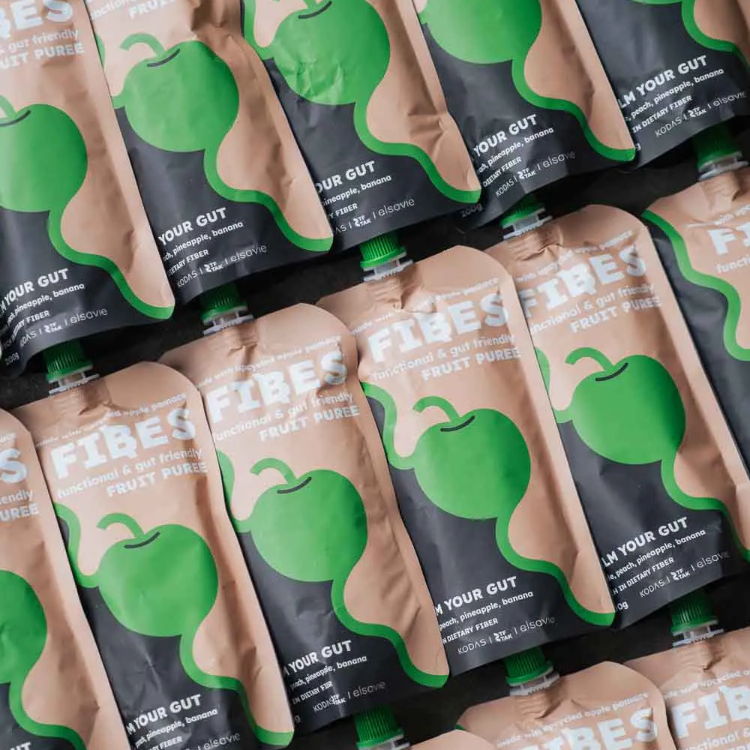
Fibes contains psyllium husk as part of a broader fiber blend — alongside citrus fiber, oat bran, marigold extract, turmeric, and aloe vera. Each ingredient was chosen for a specific role. Psyllium's job is bulking and regularity: it helps the formula work consistently, day after day, without being harsh on the digestive system.
Because Fibes is a fruit puree rather than a powder or capsule, the psyllium is already mixed into a food matrix — which makes it easier to consume and, for most people, easier on the stomach than taking psyllium on its own.
The Bottom Line
Psyllium husk is one of the best-studied dietary fibers available, with real, documented benefits for digestion, blood sugar, and cholesterol. It's not a trend ingredient — it's been earning its place in gut health research for decades. If you see it in a product, it's usually a good sign.
Want to try psyllium as part of a complete fiber routine? Explore Fibes →