



Switzerland's Fibre Gap: What the menuCH Survey Tells Us About What We're Missing
Based on research from the Universities of Bern, Basel, and Zurich — published 2024–2025
Most of us think we eat pretty well. Plenty of salad, some fruit, decent bread. But a growing body of research drawn from Switzerland's own national nutrition survey — menuCH — paints a more sobering picture: the vast majority of Swiss adults are falling well short of what their bodies need when it comes to dietary fibre.
And it turns out when you eat matters almost as much as what you eat.
What Is menuCH — And Why Should You Trust It?
The National Nutrition Survey menuCH is Switzerland's most comprehensive look at what the population actually eats. Conducted by the Institutes of Social and Preventive Medicine in Lausanne and Bern on behalf of the Federal Food Safety and Veterinary Office (FSVO) and the Federal Office of Public Health, it surveyed 2,057 adults aged 18–75 using two detailed 24-hour dietary recalls per person. That rigorous methodology — capturing not just what people eat, but when, how much, and from which food groups — has made menuCH an invaluable resource for nutrition researchers.
Since its data was released, several Swiss university teams have published findings specifically on fibre intake. Two landmark studies stand out.
Study 1: The Fibre-UPF Connection (2024, BMJ Nutrition, Prevention & Health)
Authors: Schönenberger, Huwiler, Reber, Mühlebach, Stanga, Pestoni, Faeh
Institutions: University of Bern, University of Basel, University of Zurich, Bern University of Applied Sciences
The first major analysis of fibre intake from menuCH data, published in early 2024, asked a simple but important question: how many Swiss adults are actually meeting fibre recommendations — and what role does ultra-processed food (UPF) play?
The results were striking.
87% of Swiss adults consumed less than 30 g of fibre per day — the recommended intake under DACH (Germany, Austria, Switzerland) reference values. That's nearly nine in ten people not hitting the target.
But the study went further, linking low fibre intake directly to ultra-processed food consumption. Participants in the highest quartile of UPF consumption had significantly lower odds of reaching even moderate fibre intake levels, with a clear dose-dependent relationship: the more ultra-processed food someone ate, the less fibre they tended to consume. This association held across the whole population, independent of other lifestyle and sociodemographic factors.
The conclusion was pointed: public health efforts need to simultaneously discourage ultra-processed food and actively promote whole, minimally processed foods as fibre sources.
Study 2: When You Eat Your Fibre Matters (2025, Journal of Nutritional Science)
Authors: von Blumenthal, Schönenberger, Huwiler, Stanga, Pestoni, Faeh
Institutions: University of Bern (Inselspital), University of Basel, FFHS/SUPSI, University of Zurich, Bern University of Applied Sciences
Published in March 2025, this follow-up study dug deeper into the timing and sources of fibre consumption — a dimension rarely explored in nutritional research.
The Numbers
Fibre was distributed across the day as follows:
| Meal Occasion | Mean Fibre Intake |
|---|---|
| Breakfast | 4.1 g/day |
| Lunch | 6.0 g/day |
| Dinner | 6.4 g/day |
| Between meals | smaller amounts |
Those in the highest-fibre intake group consumed dramatically more at breakfast — up to 6.4 g more per day at that meal alone — compared to low-fibre consumers. The breakfast difference was the single biggest distinguishing factor between people who meet recommendations and those who don't.
Where Fibre Actually Comes From
The research identified the top food group contributors to fibre in the Swiss diet:
- Grain products — 35.6% of total fibre (but only 17.5% from whole grains)
- Vegetables — 18.3%
- Fruits — 18.2%
- Legumes — just 1%
That legume figure is perhaps the most telling number in the entire study. Legumes — lentils, chickpeas, beans — are among the most fibre-dense foods available, yet they barely register in Swiss diets.
Breakfast Skipping: A Fibre Problem in Disguise
One of the most actionable findings concerns breakfast. Among low-fibre consumers:
- 29% skipped breakfast entirely (vs. 15% in the general menuCH population)
- Even on a relative basis (adjusting for calorie intake), breakfast skippers were significantly more likely to fall into the low-fibre group
People with high fibre intakes don't just choose different foods — they tend to start their day differently, typically with a breakfast that includes whole grains, fruit, or other fibre-rich options.
The Bigger Picture: Switzerland Isn't Alone, But That's Cold Comfort
Across Europe, average dietary fibre intake runs between 18–24 g/day for adult men and 16–20 g/day for adult women — well below the recommended 30–35 g/day. Switzerland's figures fit neatly within this range, suggesting the country shares the same structural dietary habits as its neighbours: plenty of refined grains, limited legumes, and a food environment that defaults to convenience over fibre.
The gap — estimated at roughly one-third below recommended levels across the Western world — has real health consequences. Adequate fibre intake is linked to lower risk of cardiovascular disease, type 2 diabetes, colorectal cancer, and obesity. It's not a niche nutritional concern; it sits at the core of preventive medicine.
What Can You Actually Do?
The research points to four concrete levers — plus one for the moments when life gets in the way.
1. Don't skip breakfast — and make it count. A fibre-rich breakfast is the single biggest differentiator between low and high fibre consumers. Porridge with berries, muesli with nuts, or whole-grain bread with nut butter can each deliver 5–8 g of fibre before lunch.
2. Shift from refined to whole grains. Grain products are the largest source of fibre in Swiss diets, yet only about a sixth of grain intake comes from whole grains. Switching from white bread, pasta, or rice to their whole-grain equivalents can nearly double the fibre contribution from that food group alone.
3. Eat more legumes. With legumes contributing just 1% of fibre intake, the opportunity is vast. Adding lentils to soup, chickpeas to salad, or beans to a weeknight dish is one of the highest-return dietary changes available. A single serving of lentils (~200g cooked) delivers around 8 g of fibre.
4. Reduce ultra-processed foods. The 2024 menuCH study showed a direct, dose-dependent link between UPF consumption and low fibre intake. Ultra-processed foods are typically stripped of fibre during manufacturing. Every meal built around minimally processed ingredients is a fibre opportunity.
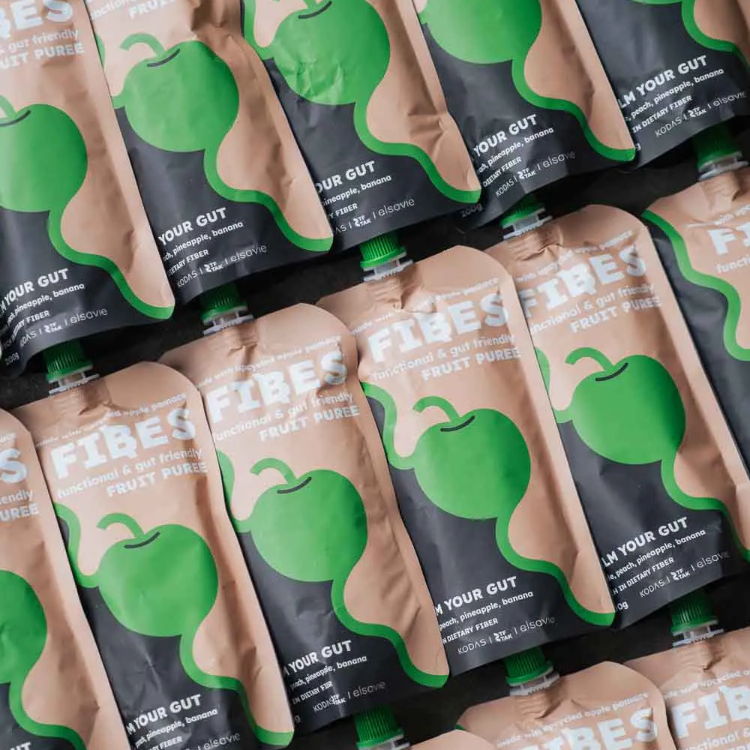
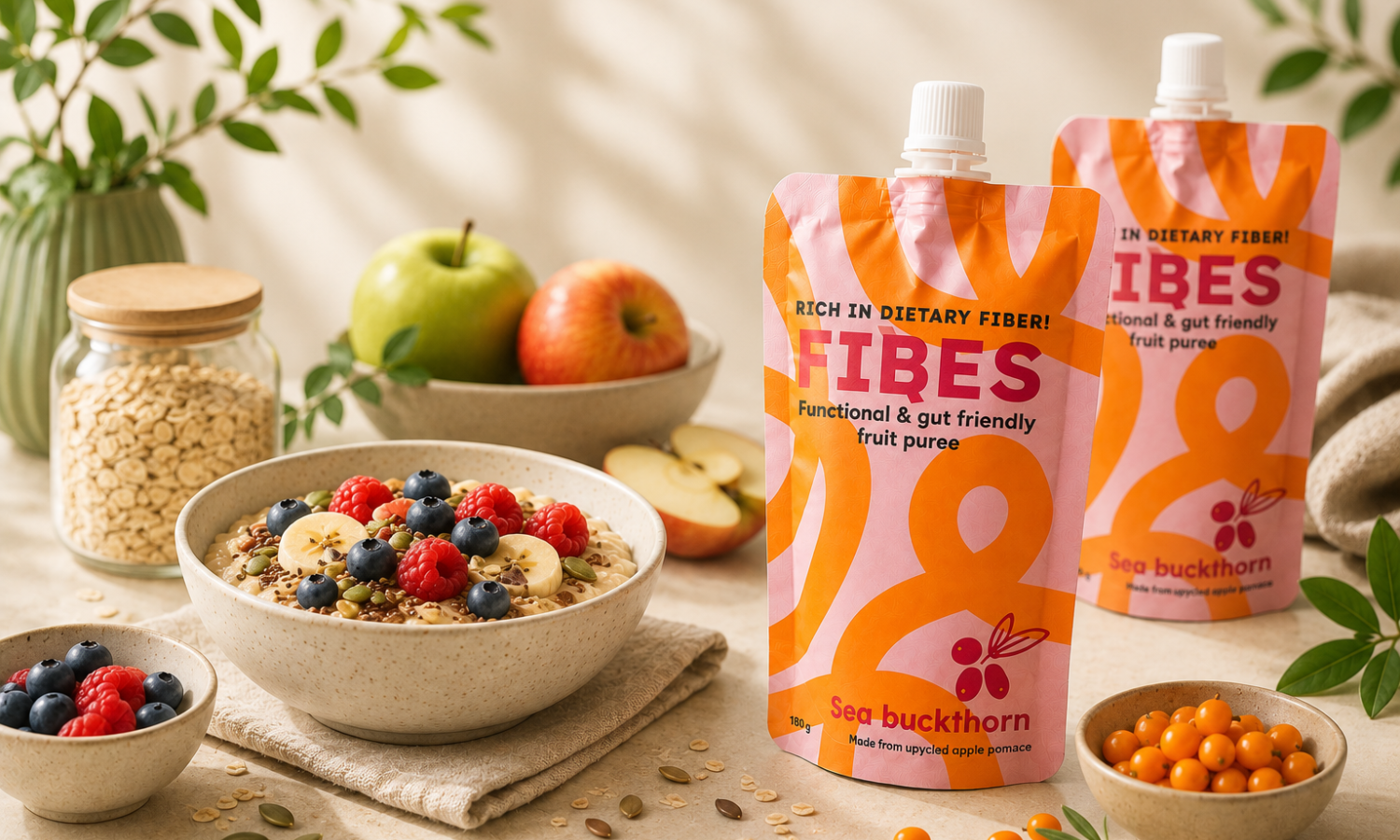
5. Fill the gaps with something convenient. The menuCH data makes one thing clear: the fibre gap doesn't open up at dinner — it opens at breakfast and in the in-between moments when cooking isn't an option. That's the problem that Fibes was built for. Made from real fruit purée with no added sugar and available in Switzerland, each Fibes pouch delivers around 6 g of dietary fibre — roughly a fifth of the daily recommendation — in a format that takes seconds to consume. Cherry, apple, or sea buckthorn: squeeze it at your desk, after a workout, or on the commute. It won't replace a bowl of lentils, but for the 87% of Swiss adults who aren't hitting their daily target, it's a genuine on-ramp.
A Note on the Research
Both studies used menuCH's nationally representative data with appropriate statistical weighting and followed STROBE-nut reporting guidelines. The research teams included clinicians and epidemiologists from multiple Swiss institutions, adding methodological rigour. The findings are as solid as population-level nutrition science gets.
The Takeaway
Switzerland is a country that prides itself on quality of life and health. Yet its dietary fibre intake — documented rigorously by its own national nutrition survey — falls short for nearly nine in ten adults. The good news is that the menuCH data doesn't just reveal the problem; it maps exactly where the gap lies and when in the day it opens up. Breakfast, whole grains, legumes, and the small daily habits in between: that's where the fibre gap is won or lost. Products like Fibes exist precisely because real life doesn't always allow for a perfect plate — and a convenient 6 g of fruit-based fibre is far better than the alternative of nothing at all.
Sources:
- Schönenberger KA et al. "Dietary fibre intake and its association with ultraprocessed food consumption in the general population of Switzerland." BMJ Nutrition, Prevention & Health, 2024. DOI: 10.1136/bmjnph-2023-000727
- von Blumenthal F et al. "Dietary fibre intake in the adult Swiss population: a comprehensive analysis of timing and sources." Journal of Nutritional Science, 2025. DOI: 10.1017/jns.2025.6
- Swiss National Nutrition Survey menuCH, Federal Food Safety and Veterinary Office / Federal Office of Public Health